Restaurant Operational Cost Reduction in the UAE: The 2026 Operator Guide
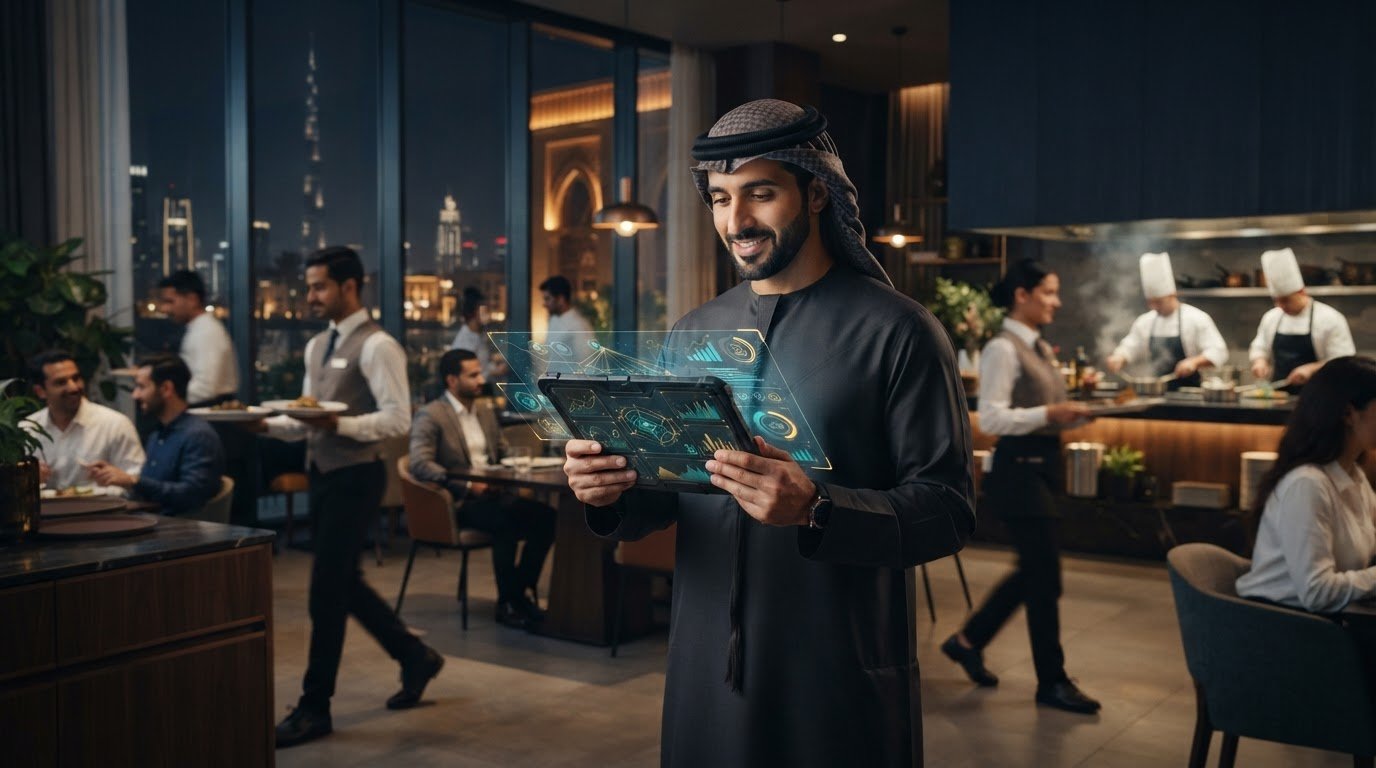
Slashing service staff to protect your bottom line is an expensive operational trap. In an environment where third-party aggregators claim up to 35% of order totals and commercial rents are surging across Dubai and Abu Dhabi, achieving effective restaurant operational cost reduction UAE operators need doesn't come from compromising hospitality. You likely experience this friction every shift. Front-of-house teams remain pinned behind a crowded counter manually re-entering tickets across multiple delivery tablets, burning expensive labor hours while diners wait for service.
Operational efficiency requires synchronizing workflows, not gutting the customer experience. You already know margins are tight under ongoing food inflation and utility tariffs, but cutting human connection only drives loyal guests away. In this 2026 operator guide, you'll discover actionable strategies to eliminate margin leakage, streamline kitchen workflows, and optimize F&B technology costs across the UAE. We break down how to automate order injection directly into your POS, establish high-margin direct ordering channels, and synchronize digital menus in real time to build a resilient, highly profitable business.
Key Takeaways
- Pinpoint hidden margin leaks across your front- and back-of-house operations to protect profitability against escalating market overhead.
- Achieve sustainable restaurant operational cost reduction UAE operators need by automating order injection directly into your point-of-sale system, redirecting labor from clerical data entry to guest service.
- Defend off-premise profit margins by balancing aggregator marketplaces with dedicated direct ordering channels and automated QR table pay.
- Eliminate phantom inventory losses and kitchen spoilage through dynamic menu engineering and instant, real-time stock synchronization across all digital menus.
- Unify your operational ecosystem with purpose-built middleware, connecting disparate sales channels to legacy systems without expensive hardware overhauls.
Auditing UAE Restaurant Operational Costs: Where Margins Leak First
Every high-performing restaurant operates like an engine; when a single gasket fails, power drops across the entire machine. In the Emirates, operators often review month-end profit-and-loss statements without knowing precisely which shifts or stations leaked their margin. Occupancy overheads like prime retail space leases in Downtown Dubai or Maryah Island in Abu Dhabi are locked by contract. Therefore, your path to sustainable profitability relies entirely on controlling variable operational expenses.
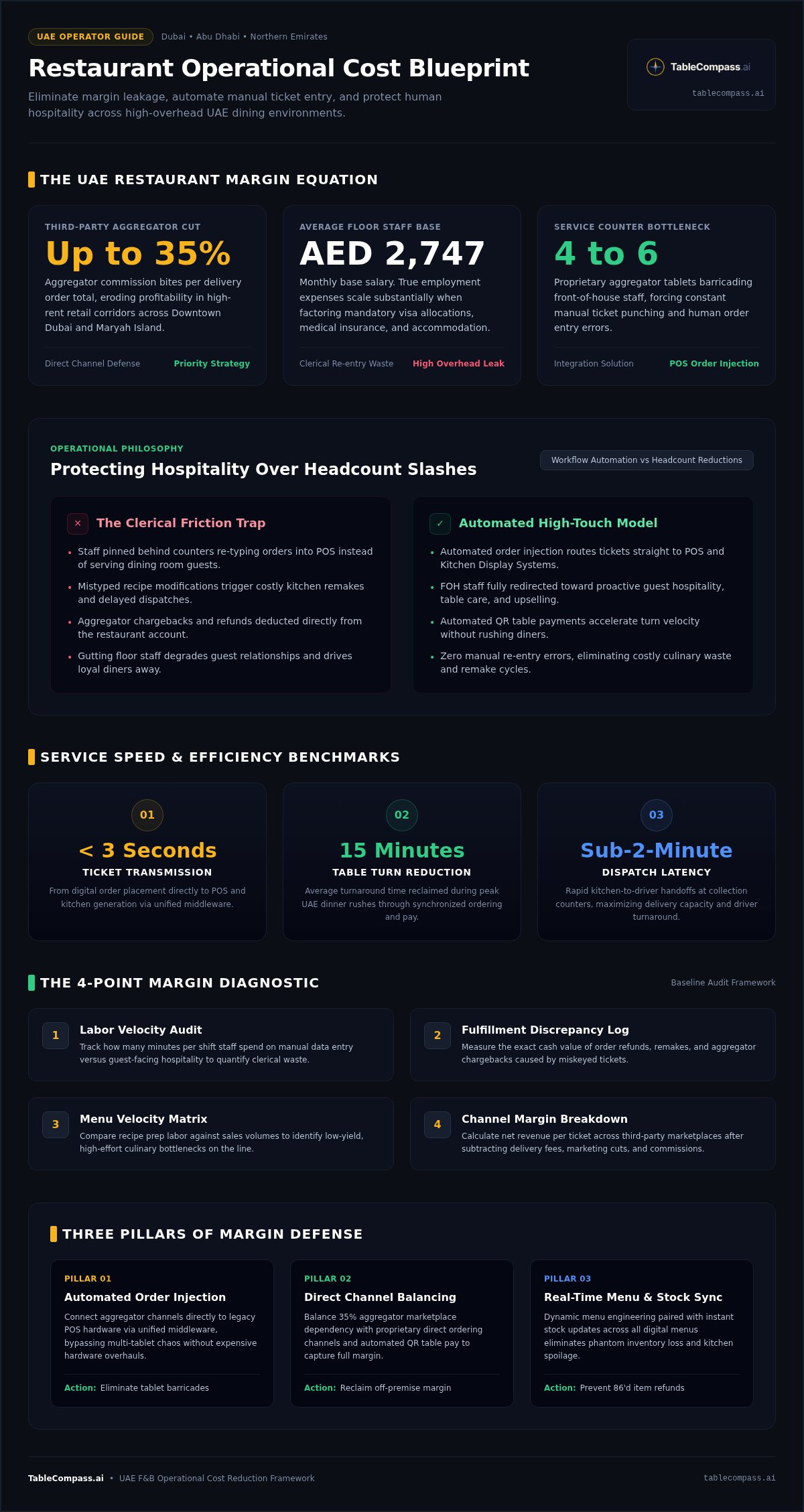
Mastering modern food and beverage control begins with an unsparing operational audit. Before implementing new digital workflows, run this four-point baseline diagnostic:
- Labor Velocity Audit: Track how many minutes per shift staff spend on manual data entry versus guest-facing hospitality.
- Fulfillment Discrepancy Log: Measure the exact cash value of order refunds, remakes, and aggregator chargebacks caused by miskeyed tickets.
- Menu Velocity Matrix: Compare recipe prep labor against sales volumes to identify low-yield, high-effort culinary bottlenecks.
- Channel Margin Breakdown: Calculate net revenue per ticket across third-party marketplaces after subtracting delivery fees, marketing cuts, and commissions.
Executing this diagnostic reveals immediate targets for the structured restaurant operational cost reduction UAE businesses need to survive shifting market demands.
The Core Cost Drivers in UAE Hospitality
Structural overhead in the Emirates poses distinct challenges. Commercial retail rents in high-footfall corridors continue climbing, putting relentless pressure on revenue per square meter. Beyond lease obligations, operator balance sheets carry mandatory visa allocations, medical insurance, housing stipends, and continuous onboarding expenses for transient staff. Compounding this, heavy reliance on imported ingredients leaves menus vulnerable to volatile international freight rates. While occupancy costs remain rigid, variable workflow inefficiencies can be systematically eliminated.
The Invisible Drain of Tablet Clutter and Manual Errors
Look at your service counter during a peak weekend dinner rush. Front-of-house staff are often trapped behind a barricade of four to six proprietary aggregator tablets, frantically re-punching tickets into the central POS. This manual re-entry wastes hours of valuable floor labor and introduces inevitable human error. A single mistyped modification triggers a kitchen remake, delayed dispatch, and an aggregator refund deducted directly from your account. Eliminating this manual chaos is an essential milestone for practical restaurant operational cost reduction UAE concepts require to protect their bottom line.
Streamlining Kitchen and Front-of-House Workflows to Cut Labor Overhead
Labor overhead represents one of the largest controllable expenses on your income statement. While average restaurant staff salaries in the UAE hover around AED 2,747 monthly, additional visa costs, insurance, and accommodation push real employment expenses much higher. Slashing headcount blindly degrades your dining experience. Instead, authentic restaurant operational cost reduction UAE operators aim for comes from removing friction points between the dining floor, the dispatch desk, and the culinary line.
When you audit daily service handoffs, you will notice valuable front-of-house staff consumed by repetitive data entry. Shifting administrative tasks into automated workflows frees your floor team to focus on guest hospitality, upsells, and faster table resets. Reclaim productive hours with these operational performance targets:
- Ticket Transmission: Under 3 seconds from order placement to kitchen ticket generation.
- Table Turn Velocity: 15-minute average reduction during peak dinner services.
- Dispatch Latency: Sub-2-minute kitchen-to-driver handoffs at collection counters.
Adopting unified middleware like OmniSync routes aggregator and floor orders directly into your system, turning these targets into standard operating procedure across all branches.
Eliminating Manual Order Entry with Seamless Integration
Direct order injection routes external delivery orders into your kitchen stations automatically. Rather than paying a staff member to transcribe details from aggregator tablets, your POS handles processing without manual intervention. You can implement seamless restaurant POS synchronization to connect legacy terminals to aggregators. Kitchen lines receive formatted tickets instantly, cutting prep bottlenecks and eliminating costly miskeys during intense dinner rushes.
Accelerating Service via QR Table Ordering & Pay
Modern diners want speed, autonomy, and simple payment methods. Deploying QR Table Ordering & Pay allows guests to explore interactive digital menus, send modifications directly to the kitchen, and settle bills from their smartphones. When evaluating workflow changes, review best practices for integrating QR ordering with POS systems to maintain synchronicity. Dining rooms turn tables faster during busy shifts without demanding larger front-of-house teams.
Optimizing Labor Rosters Against Service Demand Curves
Stop drafting rosters based on outdated guesswork. Sync your point-of-sale data with delivery channel reports to identify true demand curves hour by hour. Cut rostered prep staff during quiet weekday afternoons between 2:00 PM and 5:00 PM, then direct those labor hours into peak evening periods. Cross-train floor servers so they can pivot effortlessly between dining room guest hosting and dispatch order bagging. For tailored workflow strategies, consult TableCompass.ai to integrate and optimize your operational pipeline.
Delivery Margin Defense: Balancing Third-Party Aggregators with Direct Channels
Third-party aggregators dominate regional consumer discovery, but relying entirely on them erodes operational viability. While marketplaces provide unmatched exposure across high-density neighborhoods, platform commissions ranging from 15% to 35% devour your margins. Abandoning aggregators altogether isn't realistic. Instead, high-performing operators build a hybrid fulfillment architecture. This model treats marketplace platforms strictly as customer acquisition engines, unlocking the systematic restaurant operational cost reduction UAE brands need to maintain healthy balance sheets.
Defending off-premise profit margins requires clear channel benchmarks:
- Acquisition Accounting: Classify aggregator commissions as marketing expenses for acquiring first-time diners rather than ongoing fulfillment costs.
- Direct Migration Funnel: Use smart packaging inserts and digital receipts to channel repeat diners toward direct ordering.
- Net Margin Audit: Monitor channel-specific profitability weekly after deducting marketplace commissions, delivery packaging, and food costs.
Controlling Aggregator Operational Overhead
Running disconnected delivery operations leads to steep financial penalties. Delayed kitchen acceptance, unfulfilled special instructions, or stock mismatches trigger order cancellations that aggregator algorithms penalize heavily. Implementing a centralized restaurant aggregator integration solution harmonizes incoming orders directly with your central kitchen queue. When prep pacing updates dynamically and menus reflect real-time line capacity, you eliminate costly cancellation fees and protect your platform ranking.
Capturing Repeat Margin Through Branded Direct Apps
Long-term profitability depends on direct customer ownership. Deploying a dedicated White-Label Mobile App enables you to bypass marketplace cuts entirely on recurring orders. Diners earn integrated loyalty rewards, store their preferred payment details, and reorder favourite meals in seconds. Retaining first-party customer profiles lets you drive personalized marketing campaigns without paying platform ad fees. Shifting even 20% of your off-premise volume to direct channels delivers practical restaurant operational cost reduction UAE operators can immediately reinvest into prime ingredient sourcing or front-of-house talent.
Eliminating Waste Through Real-Time Menu Engineering and Inventory Sync
Food waste and unrecorded inventory shrinkage silently drain restaurant margins. In busy kitchens juggling floor guests alongside delivery tickets, unsynchronized menus produce phantom inventory, where items appear orderable online despite being exhausted at the prep line. When chefs discover ingredient shortages mid-service, prep lines stall, ingredients go to waste, and customer orders get voided. Achieving measurable restaurant operational cost reduction UAE operators need requires transforming your menu into an active operational blueprint.
Dynamic menu engineering places high-margin, low-prep culinary items at the center of every sales channel. Aligning ingredient depletion directly with real-time POS ticket volume creates actionable control across your operations:
- Cross-Utilization Architecture: Design menu offerings around shared core ingredients to accelerate stock rotation and prevent perishable spoilage.
- Dynamic Throughput Balancing: Promote fast-firing dishes during intense dinner rushes to protect back-of-house culinary flow.
- Threshold Depletion Triggers: Automatically throttle or suppress complex items when line prep levels drop below critical margins.
Centralizing Digital Menus Across Multi-Channel Channels
Updating disconnected menus across three delivery aggregators, a direct app, and dine-in QR codes guarantees pricing discrepancies and administrative waste. Leveraging centralized menu management for UAE restaurants through Atlas Menu Management lets you push recipe changes, update photography, and adjust seasonal prices everywhere in a single action. You eliminate manual portal management while ensuring digital menus reflect immediate ingredient price shifts across all branches.
Automated 86ing to Halt Costly Order Cancellations
Few events disrupt kitchen momentum like an aggregator ticket printing for an ingredient you exhausted an hour earlier. Line cooks break rhythm, managers make rushed phone calls to disappointed guests, and delivery riders crowd your dispatch counter. Automated 86ing removes sold-out items across every active delivery platform the second inventory depletes. Protecting your kitchen brigade from unfillable tickets eliminates chargeback penalties and sustains the disciplined restaurant operational cost reduction UAE venues require. Unify your menus with TableCompass.ai to automate inventory synchronization across every sales channel today.
Building an Integrated F&B Technology Architecture in the UAE
Ripping out established POS hardware to resolve operational silos is an expensive, unnecessary mistake. Legacy terminals, specialized kitchen printers, and team muscle memory don't need replacement. Instead, enterprise middleware acts as a central nervous system, connecting your existing terminal infrastructure directly to delivery aggregators and direct sales channels. This architecture unlocks the tangible restaurant operational cost reduction UAE groups demand without capital-intensive hardware purchases or service interruptions.
A structured technology rollout maintains service continuity across your venues:
- Phase 1: Diagnostic Mapping: Audit existing POS data flows, kitchen printers, and external digital ordering channels.
- Phase 2: Middleware Deployment: Interface legacy databases with a central digital bridge without taking terminals offline.
- Phase 3: Real-Time Synchronization: Activate automated order routing and centralized menu controls across every channel.
Connecting Existing POS Systems via Enterprise Middleware
Preserving your primary point-of-sale infrastructure protects historical reporting, avoids expensive staff retraining, and avoids capital expenditure on replacement terminals. Modern POS middleware for UAE hospitality bridges the technical divide between legacy database setups and dynamic aggregator APIs. Platforms utilizing TableCompass.ai Universal Bridge allow multi-unit restaurant groups across Dubai and Abu Dhabi to link bespoke architectures directly to modern marketplaces, creating unified data streams without operational downtime.
Unifying Operational Control with TableCompass.ai
Sustainable restaurant operational cost reduction UAE operators achieve relies on structural alignment rather than disconnected tools. TableCompass.ai unifies fragmented operations into a cohesive system. OmniSync automates multi-channel order injection to eliminate manual re-entry errors, while Atlas Menu Management controls item availability and pricing across all delivery platforms in seconds. Complementing this, GuestConnect AI drives customer loyalty retention to bring repeat diners through high-margin direct channels. Protect your operating margins and take command of your restaurant technology by scheduling a demo with TableCompass.ai.
Reclaim Your Margins: The Operational Blueprint for 2026
Protecting restaurant profits in today's demanding market doesn't require cutting frontline hospitality staff or discarding functioning point-of-sale terminals. True restaurant operational cost reduction UAE operators achieve stems from structural alignment. When you automate order injection directly into kitchen queues, balance marketplace exposure with high-margin direct channels, and synchronize live menus across every digital touchpoint, operational friction transforms into predictable profitability.
TableCompass.ai delivers the central nervous system regional hospitality groups need to scale efficiently. With zero disruption to existing POS hardware or kitchen display configurations, our proven middleware suite featuring OmniSync, Universal Bridge, and Atlas Menu Management connects your disconnected technology stacks into a unified engine. Reclaim wasted labor hours, eliminate inventory discrepancies, and give your teams the operational stability to focus entirely on genuine guest hospitality. Streamline your UAE restaurant operations with TableCompass.ai.
Frequently Asked Questions
How can UAE restaurants effectively reduce operating costs without compromising food quality?
You reduce operating costs by automating administrative bottlenecks rather than degrading your menu ingredients. Eliminating manual ticket re-entry, optimizing staff schedules against verified POS hourly sales, and setting dynamic inventory triggers systematically lower operational overhead. These workflow improvements deliver sustained restaurant operational cost reduction UAE operators need without cutting portion sizes or compromising guest hospitality standards.
What is the biggest hidden operational cost for restaurants operating in Dubai and Abu Dhabi?
Fulfillment discrepancies caused by fragmented ordering channels represent the steepest hidden operational expense. Between customer chargebacks, remakes from miskeyed modifier notes, and unrecorded inventory shrinkage, restaurants quietly lose significant revenue. These cumulative clerical errors often surpass surface-level utility increases or minor price changes in seasonal raw ingredients.
Can POS middleware really help reduce front-of-house labor expenses?
Yes, middleware directly cuts labor expenses by eliminating manual administrative tasks from floor shifts. Solutions like TableCompass.ai OmniSync automatically transmit aggregator orders straight into kitchen prep queues. Front-of-house teams no longer waste hours typing tickets from external tablets into POS registers, allowing smaller, agile floor teams to manage higher customer volumes effectively.
How does manual order entry from delivery tablets affect a restaurant bottom line?
Manual re-entry drains margins through dedicated staffing hours and expensive fulfillment mistakes. When floor servers juggle multiple third-party tablets during intense peak rushes, typing errors trigger inaccurate kitchen preparation. The venue absorbs the total cost of food waste, delayed courier handoffs, and customer refund penalties imposed by delivery aggregator algorithms.
Is it better to replace an existing POS or connect it with integration middleware?
Connecting your current system via integration middleware is far more cost-effective than a total POS replacement. Replacing point-of-sale hardware disrupts dining room operations, erases historical performance records, and incurs heavy capital expenditure. Middleware like TableCompass.ai Universal Bridge links legacy POS setups directly to modern delivery marketplaces with zero operational downtime.
How does real-time inventory syncing across delivery platforms prevent financial loss?
Real-time synchronization prevents financial loss by instantly removing sold-out items across every digital ordering channel. Atlas Menu Management 86es exhausted ingredients everywhere the moment POS sales log critical depletion levels. This eliminates unfillable tickets, prevents awkward customer cancellations, and safeguards venues against steep third-party marketplace cancellation fees.
What role do branded mobile ordering apps play in protecting restaurant margins?
Branded White-Label Mobile Apps protect your margins by shifting repeat off-premise diners away from steep aggregator commissions. Capturing regular orders through your own direct channel retains the full ticket value. Direct apps also build valuable first-party customer profiles, enabling automated loyalty rewards and targeted re-engagement campaigns without ongoing digital marketplace ad fees.